



What’s the easiest way to clean between your teeth?
You brush your teeth twice a day, use mouthwash regularly – you’re good to go, right? Well, not quite. Brushing actually only cleans between 40% and 60% of your teeth. For a really thorough, proper clean, you also need to be tackling the spaces between your teeth, removing food and plaque and helping to reduce issues like decay, gum disease and bad breath. Unfortunately, many people find interdental cleaning intimidating – but it doesn’t need to be! Let’s explore the different ways you can clean between your teeth, and see which method could work best for you!
Dental floss/tape
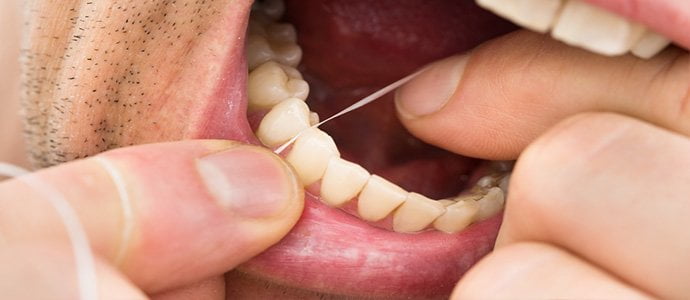
Dental floss is a thin thread, typically made of synthetic nylon or Teflon, and is ideal for cleaning very tight interdental spaces. It’s available in two main forms – waxed and unwaxed, each with its own unique benefits. For example, if you find that floss regularly gets stuck, breaks or frays, then using a waxed option can help keep the process smooth. Unwaxed floss, on the other hand, is a little thinner, so it’s better for narrower gaps. You can also buy dental tape, a broader, ribbon-like option designed for slightly wider spaces. Some people find it easier to handle than floss, and it can be a bit more comfortable for sensitive gums.
While a lot of people appreciate the flexibility provided by floss and tape and enjoy being able to control the level of tautness, some patients find it tricky to reach the back teeth properly with this method. When using floss or tape, proper technique is essential to prevent pain, bleeding and even gum recession. Always curve the floss into a C-shape, carefully gliding it up and down the side of each tooth. Take your time, and be careful not to snap the floss into the gum tissue. While you can use a gentle sawing motion to ease the floss between your teeth, you should then switch to an up-and-down scraping motion against the side of each tooth. If you start flossing and notice a little bit of blood, don’t worry – it can be off-putting, but it’s actually fairly normal. However, if you keep feeling pain or experiencing bleeding, it’s always a good idea to reach out to your dentist.
Floss picks
Floss picks, sometimes called dental flossers, are essentially a small, pre-threaded plastic tool. Floss picks are often favoured by people who struggle with traditional string or tape floss, and are ideal for smaller mouths or patients with dexterity issues, providing a more comfortable and efficient cleaning experience. A floss pick’s handle provides a good grip, making it easier to reach the back teeth. With this in mind, they’re a great way of introducing flossing to children. However, there are downsides. Dental floss and tape are generally more effective than floss picks, as they have the flexibility to better hug the contours of the tooth. Even so, any kind of interdental cleaning is better than nothing – it’s all about finding what works for you!
Interdental brushes
Interdental brushes are great for larger tooth gaps, and can be particularly helpful for people with braces. They come in a wide range of colour-coded sizes, with diameters starting at 0.4mm and going up to 1.5mm. Start with the smallest option and try out a few different sizes to find the right choice for you – you may require different-sized brushes for different areas of the mouth. If you find yourself having to force the brush into the space between your teeth, it’s likely too big. Interdental brushes are also especially effective for people with gum disease, and are more gentle on your gums compared to dental floss. Again, when you start using interdental brushes, it’s normal to notice a bit of bleeding – it should stop after a few days.
Water flossers
If you’re someone who struggles with more traditional, manual flossing methods, then a water flosser could be ideal. A water flosser is essentially a device that shoots a pulsating stream of water into your mouth, flushing out food debris and plaque from the interdental spaces and along the gum line. It’s a great option for patients with braces or dental implants, or even just people who struggle to manoeuvre floss around hard-to-reach areas. It can also be better for people who have sensitive, inflamed gums, as it’s more gentle and actually massages the gums, stimulating blood flow and helping to keep them healthy. On the other hand, water flossers can be quite pricey, and you’ll still need to use more traditional flossing methods, too.
Whichever option you choose, routine is key. With the right oral hygiene process, you can prevent gum disease, pain and even tooth loss – but if you’re unsure which kind of interdental cleaning technique will work best for you, we can help! At AP Smilecare, we’re dedicated to protecting your oral health and keeping your smile bright and strong, and we’re always happy to advise you on how to look after your teeth.
So, if you’re in the Blackburn area and are looking for a friendly dentist, why not reach out? With over 20 years of experience and a 5* client satisfaction rating, we’re Blackburn’s number one dental practice for a reason. Whether you’re interested in family dentistry or need emergency dental care, we’re ready to help. Take a look at our general dentistry treatments or give one of our friendly team members a call on 01254 297 000 today!



 Dentures
 Dental Implants
 Braces
 Teeth Whitening
 Smile Makeover